
Water Heater Problems: Warning Signs You Shouldn’t Ignore
Water Heater Problems: Warning Signs You Shouldn’t Ignore
A reliable water heater is essential for everyday comfort, whether you’re taking a shower, washing dishes, or handling household cleaning. However, when a water heater starts developing faults, the early signs can be easy to overlook. Strange noises, inconsistent water temperatures, leaks, or rising energy bills may indicate that your system needs attention.
For homeowners across the UAE, recognising these warning signs early can help prevent unexpected breakdowns, water damage, and potentially costly repairs. In this guide, Real Living UAE explains the most common water heater problems, what they could mean, and when to call a professional.
1. Water Isn’t Getting Hot Enough
One of the clearest signs of a water heater problem is water that remains lukewarm or takes much longer than usual to heat.
Possible causes include:
- A faulty heating element in an electric water heater.
- A malfunctioning thermostat.
- Sediment or mineral deposits affecting heating performance.
- An undersized unit struggling to meet household demand.
- An interruption to the electrical supply or another system fault.
If the water temperature changes unexpectedly or never reaches its usual level, arrange an inspection rather than repeatedly adjusting the controls.
2. Water Temperature Keeps Fluctuating
Does your shower switch between hot and cold without warning? Unstable water temperature can make everyday tasks frustrating and may point to a problem with the heater or the wider plumbing system.
Potential causes include a faulty thermostat, a failing heating component, inconsistent water flow, or a mixing valve issue.
If the temperature fluctuates frequently, a qualified technician can assess the system and determine whether the problem lies with the water heater, plumbing connections, or temperature controls.
3. Water Is Leaking Around the Heater
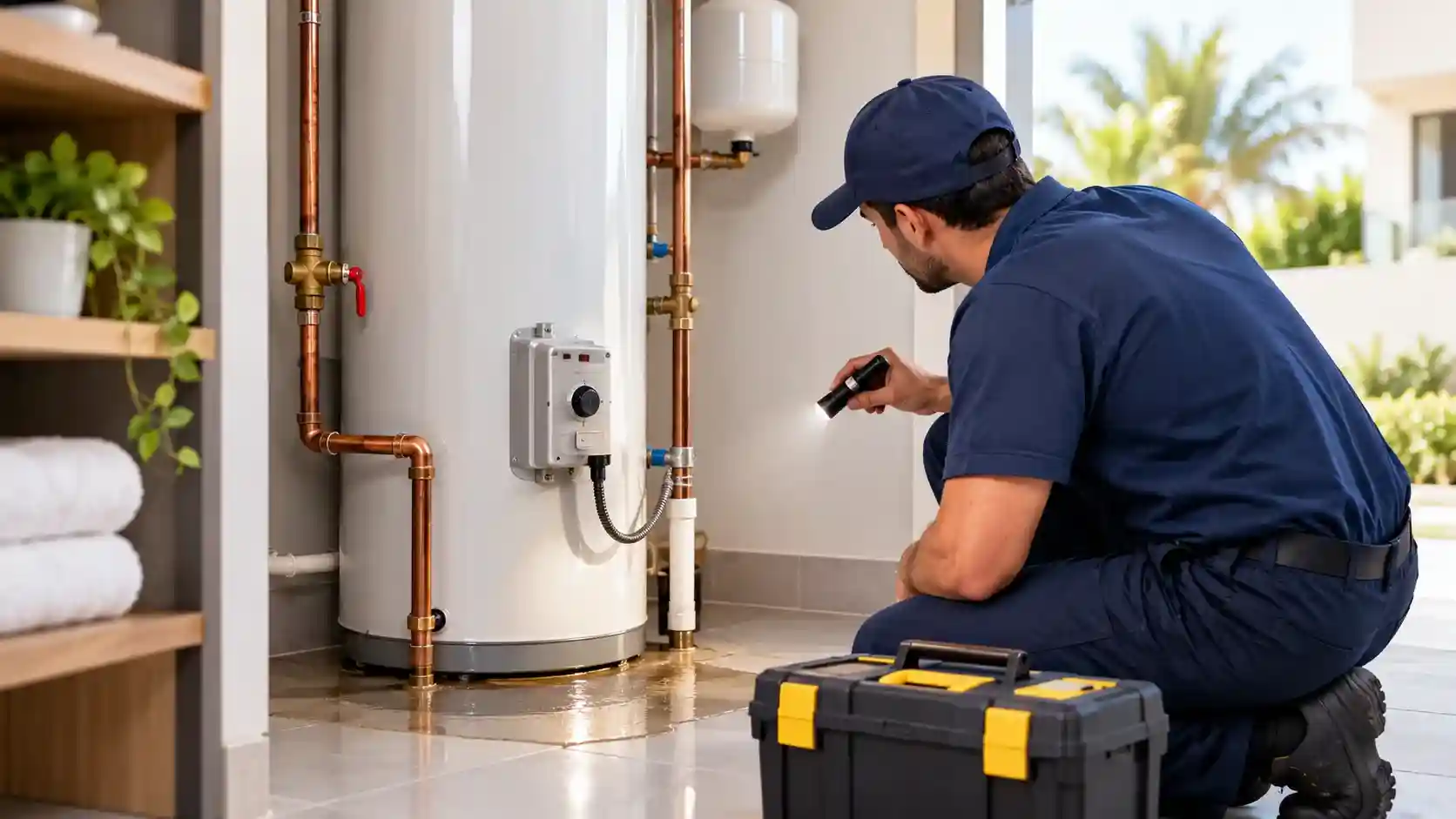
Water pooling beneath a water heater should never be ignored. Even a small leak can damage cabinets, flooring, nearby walls, or electrical components if left unresolved.
Common sources include:
- Loose or deteriorating plumbing connections.
- A leaking drain valve.
- A faulty pressure-relief valve.
- Corrosion or damage to the tank itself.
What should you do?
If the leak is small and the source is unclear, arrange professional assistance promptly. If water is reaching electrical components, keep away from the area and do not touch wet electrical equipment. Shut off the water supply only if it is safe to do so, and contact a qualified professional.
A leaking tank may require replacement rather than repair, depending on its condition and the location of the leak.
4. Strange Popping, Rumbling, or Hissing Sounds
A water heater may produce occasional operating sounds, but persistent or unusually loud noises deserve attention.
Popping or rumbling can occur when sediment accumulates inside the tank and affects the heating process. Hissing may indicate escaping water or steam, although the cause depends on the type of heater and the circumstances.
If the sounds are new, getting louder, or accompanied by leaks or poor heating, arrange an inspection. Avoid opening the unit or attempting to remove internal components yourself.
5. Hot Water Runs Out Too Quickly
If your household runs out of hot water sooner than it used to, the system may not be heating or storing water effectively.
Possible explanations include:
- A damaged or weakened heating element.
- Sediment reducing the usable capacity of the tank.
- A thermostat problem.
- Increased household demand.
- A unit that no longer suits the property’s hot-water requirements.
A technician can test the heater’s performance and help determine whether servicing, component replacement, or a more suitable unit is needed.
6. Rusty, Cloudy, or Unpleasant-Smelling Hot Water
Changes in the appearance or smell of hot water can indicate a problem that needs investigation.
Brown or rusty water may be associated with corrosion inside the water heater or deterioration in the plumbing. An unusual smell may have a different cause, including conditions within the plumbing or water system.
To help identify the source, check whether the issue affects only hot water or both hot and cold taps. If the problem persists, arrange a professional assessment. If the water has an unusual colour, smell, or appearance, avoid using it for drinking or food preparation until the cause has been assessed.
7. Your Energy Bills Are Increasing
A sudden rise in electricity consumption may have several explanations, but an inefficient water heater is one possibility worth checking.
Sediment buildup, faulty temperature controls, damaged heating components, or excessive heat loss can affect performance. However, changes in household usage, electricity rates, and other appliances can also influence your bill.
If your energy costs have increased without an obvious reason, compare your usage and arrange an inspection if the heater appears to be operating inefficiently.
8. The Water Heater Trips the Circuit Breaker
A water heater that repeatedly trips its circuit breaker may have an electrical fault. Possible causes include damaged wiring, a faulty heating element, moisture affecting electrical components, or another issue within the circuit.
Do not repeatedly reset the breaker or attempt electrical repairs yourself. Stop using the heater and contact a qualified electrician or water heater technician. If you notice burning smells, sparks, smoke, or visible damage, keep clear of the equipment and seek urgent professional assistance.
9. Visible Corrosion or Deterioration
Rust around fittings, corroded pipe connections, damaged insulation, or deterioration on the outer casing can indicate that parts of the system are ageing or exposed to moisture.
Visible corrosion does not always mean the tank itself has failed, but it should be investigated. If the storage tank is corroding or leaking, replacement may be the safest long-term option.
Regular professional checks can help identify deterioration before it develops into a more serious fault.
10. The Water Heater Is Getting Older
Even a water heater that still works can become less reliable as it ages. Components wear out, performance may decline, and repairs can become more frequent.
Whether repair or replacement is the better choice depends on the unit’s age, condition, repair history, efficiency, and the cost of the required work.
Ask a qualified technician to assess the system and explain the available options before making a decision.
What to Do When You Notice a Water Heater Problem
Taking the right steps can help reduce the risk of further damage.
- Identify the warning sign: Note whether the issue involves temperature, water flow, unusual sounds, leaks, or electrical interruptions.
- Stop using unsafe equipment: Do not continue operating a heater with a suspected electrical fault, active leak near electrical parts, or signs of overheating.
- Avoid DIY repairs: Water heaters may involve electricity, pressurised water, and hot components. Internal repairs should be handled by qualified professionals.
- Arrange an inspection: A technician can identify the fault, assess the condition of the system, and recommend the appropriate repair.
- Keep a record: Note when the problem started and whether it occurs consistently. This information can help with diagnosis.
How to Help Prevent Water Heater Problems
Routine care can reduce the likelihood of unexpected faults and help your system operate reliably.
- Arrange inspections according to the manufacturer’s recommendations.
- Have the temperature and safety controls checked when appropriate.
- Address minor leaks and unusual noises promptly.
- Follow the manufacturer’s guidance for tank flushing or descaling, where applicable.
- Keep the area around the heater clear and accessible.
- Ensure electrical work and repairs are completed by qualified professionals.
- Consider replacement when the system becomes unreliable or repairs are no longer economical.
In the UAE, regular property maintenance is particularly useful for spotting leaks, moisture, and equipment deterioration before they affect other areas of the home.
Get Professional Water Heater Support with Real Living UAE
A faulty water heater can disrupt your routine and, in some cases, create risks involving leaks, scalding, or electrical faults. Recognising the early warning signs helps you act before the problem becomes more serious.
Real Living UAE provides property maintenance support across the UAE, including plumbing assistance and general home repairs. Whether you’re dealing with inconsistent hot water, a leaking connection, or another household maintenance concern, the right professional assessment can help you understand the next steps.
Don’t wait for a small fault to become a bigger problem. Contact Real Living UAE to discuss your home maintenance needs and arrange the appropriate support.
Real Living UAE — Right service, every time.